Annual Report 2025
Founder’s Message
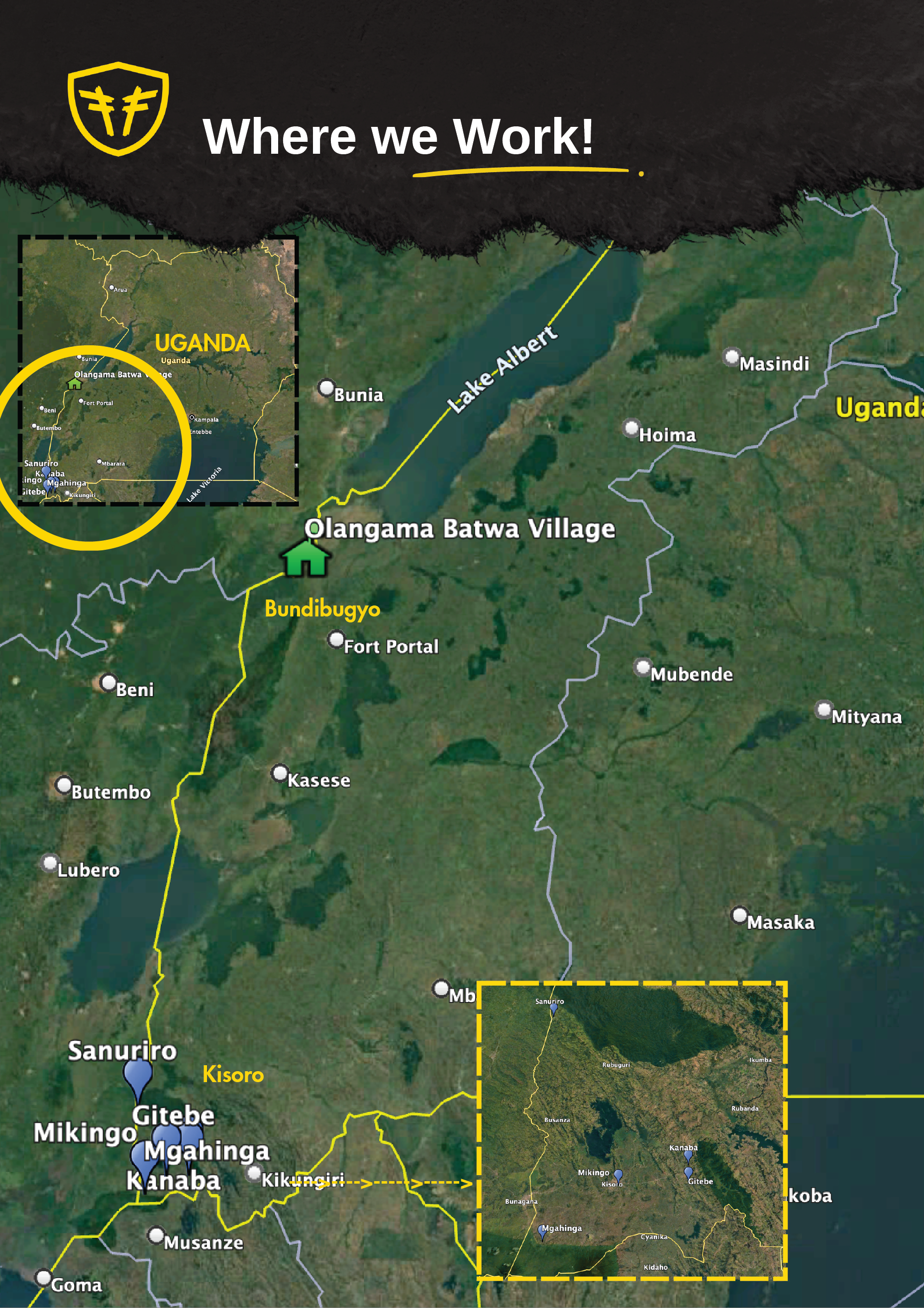
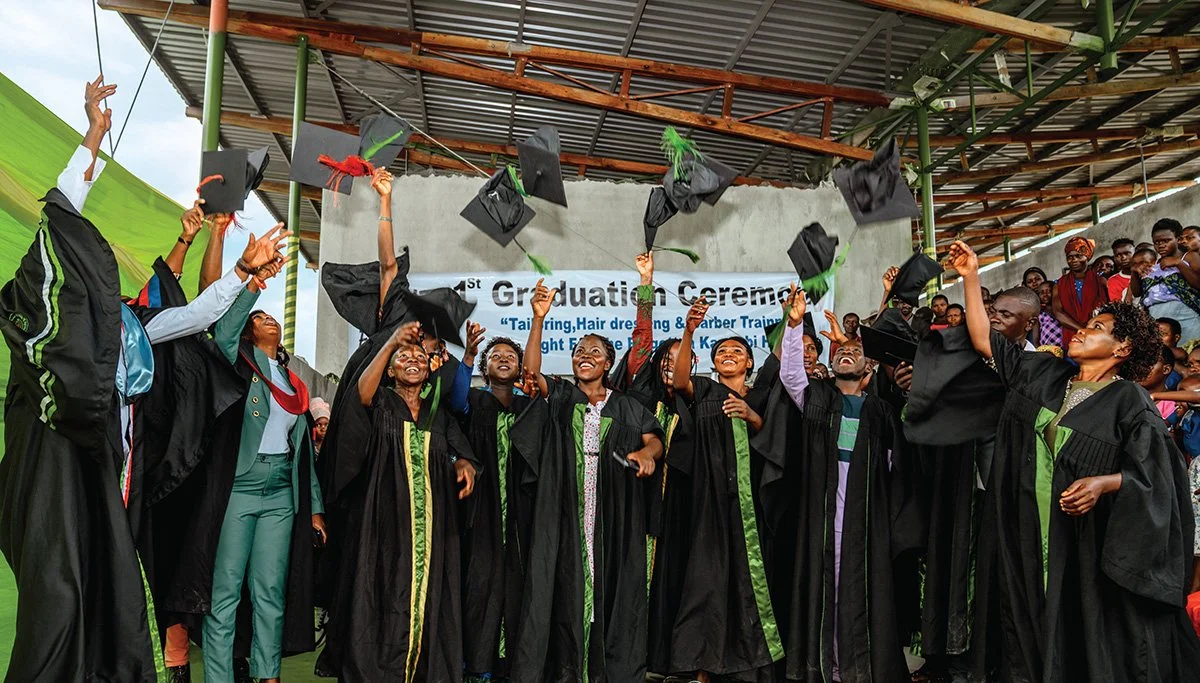
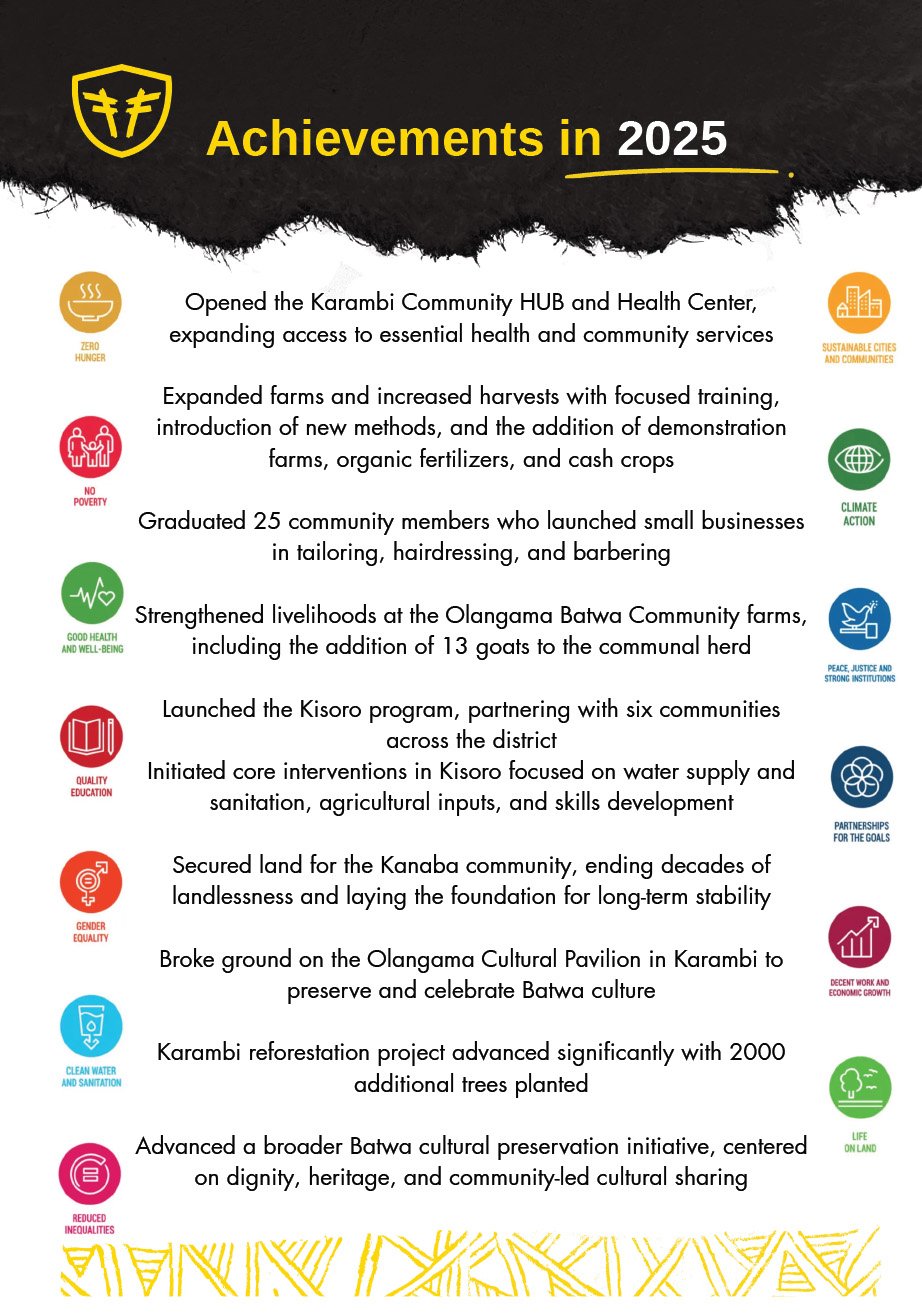
2025 was a year of foundational growth for Fight For The Forgotten. We celebrated the opening of our Karambi Community HUB and Health Center. Twenty-five community members graduated and started their own businesses in tailoring, hairdressing, and barbering. The Olangama Batwa Community farms are flourishing and the community has added 13 goats to their herd. We opened our Kisoro program, partnering with 6 communities in the District. Starting slowly with water supply and sanitation, agricultural inputs, and skills development. We closed the year on a powerful note purchasing land for the Kanaba, who have lived landless for decades. Back in Karambi, we broke ground on the Olangama cultural pavilion - to preserve, and celebrate, Batwa culture and a first step in our broader Batwa cultural preservation project. 2025 was an extraordinary year of building hope, shaping futures, strengthening communities, and overcoming oppression with love.
Thank you all for following our journey.
Thank you, thank you, THANK YOU!!

Organizational Summary
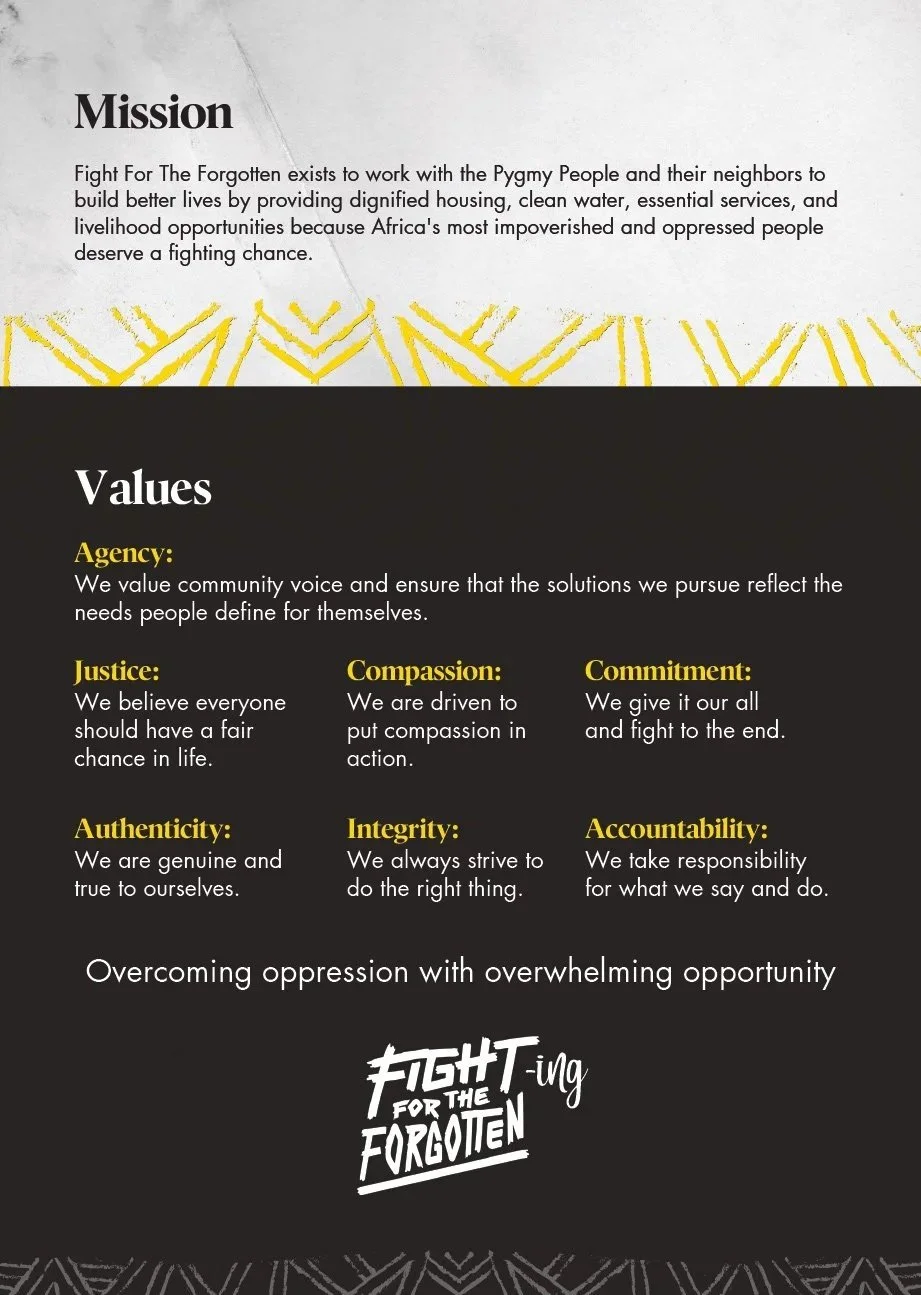
Fight for the Forgotten is a registered non-profit organization that has operated in Uganda since 2015. The organization is focused on the sustainable development of the Pygmy tribes in Western Congo and Eastern Uganda. This commenced with land security, clean water, and reestablishment of the forest so beloved by the people.
As the organization matured, shifting from Congo to Uganda, a new vision evolved, one of whole community development, one that envisions the Batwa living in peace amongst their neighbors, flourishing in their environment once again and thriving as a people with health, education, joy, and hope for the future.
Strategic Focus
Rather than focus on one area of expertise, FFTF recognizes that true development requires a multi-faceted approach. Lasting change rarely comes from a single intervention - it emerges when interconnected needs are addressed together: land security, water access, housing, education, health, livelihoods, cultural identity, and community leadership.
By listening closely to the communities we serve and allowing them to define their priorities, FFTF is able to support holistic solutions that reflect real life. This approach ensures that improvements are sustainable, culturally grounded, and truly transformative, empowering communities to build the foundations of long- term wellbeing and self-reliance.
Kabona’s Journey: From Karambi to the Coast
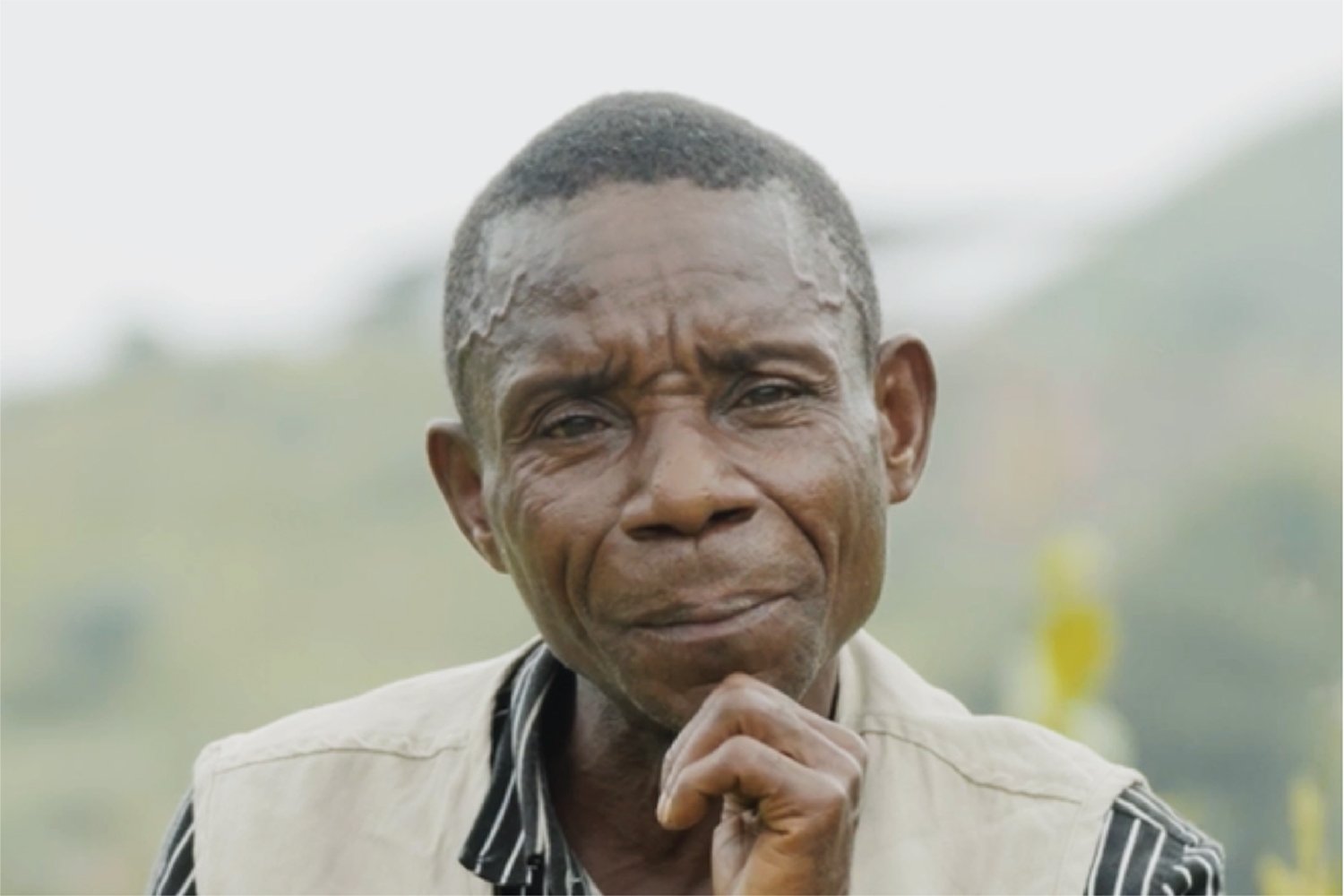
For most of his life, Kabona had never dreamed he would board a plane, let alone travel beyond the hills of Bundibugyo. Yet earlier this year, he found himself soaring high above the clouds - a journey that would change both his perspective and his purpose.
In Kenya, Kabona joined a training program focused on modern and sustainable farming techniques, including soil management, irrigation, and organic fertilizer production. He visited thriving farms where crops grew even in dry conditions, and he took careful notes, eager to bring every lesson home.
Back in Karambi, Kabona is putting his learning into practice. He’s transforming his garden into a model of productivity and sustainability, using the techniques he learned abroad. His dream is to have the best garden in the community and to become a mentor for other farmers, helping them see that innovation and hard work can transform into abundance.
Kabona’s journey is more than a personal success - it’s a story of curiosity, courage, and the power of knowledge to uplift an entire community.
Kamanya’s Restaurant
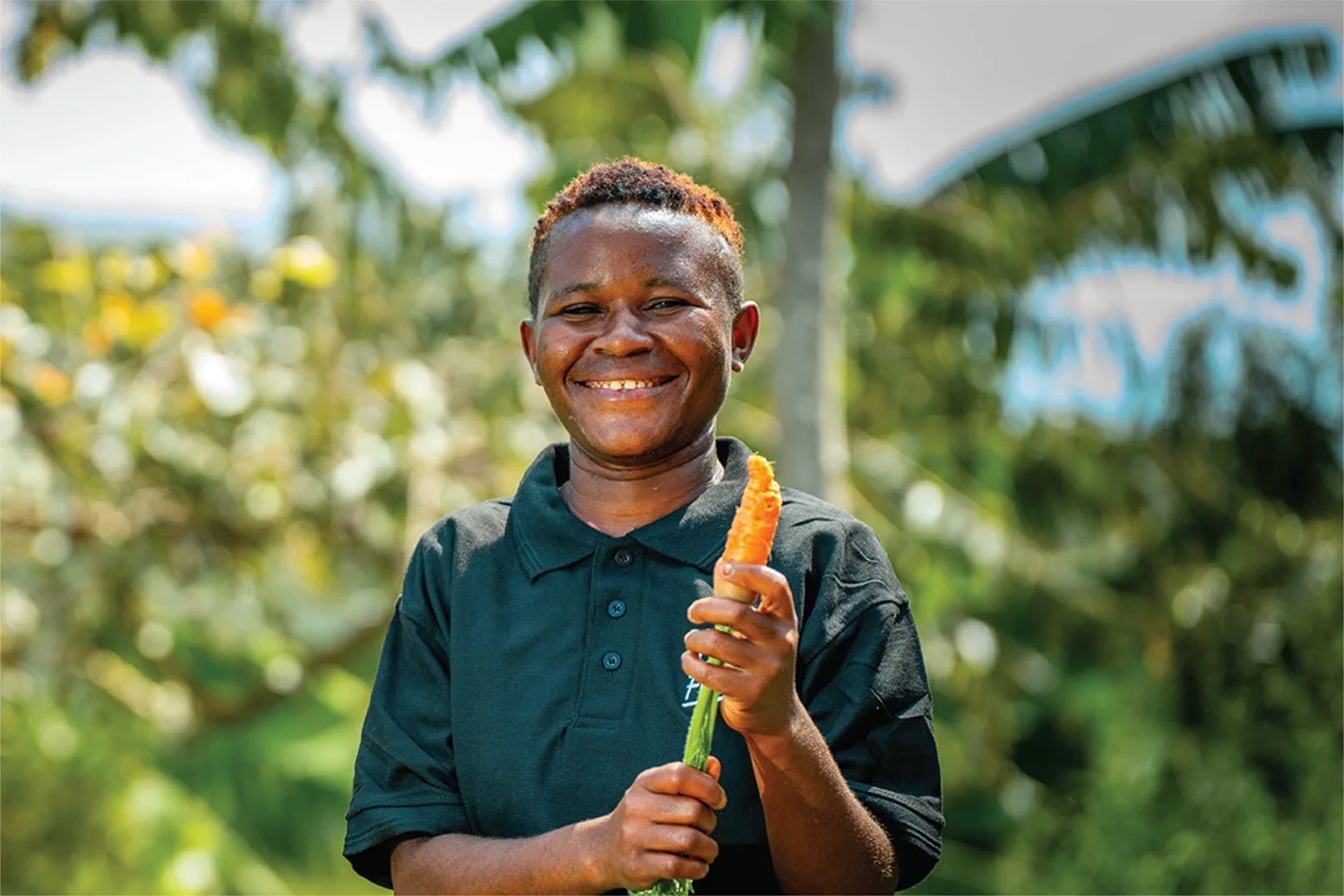
When Kamanya was growing up, he never imagined that he would one day run his own business. As a young child, he and his community were evicted from their forest home, forced to leave behind the only life they had ever known. His family settled in the slums of a small town, where the rains carried sewage past their doorway and the nights echoed with insults hurled at the Batwa families who lived there. Survival became routine, and dreams felt like a luxury far out of reach.
When his family later moved to Karambi, Kamanya found himself surrounded by new opportunities but also new challenges. He had never been taught how to work, how to build something of his own, or even to imagine a different future. But slowly, through encouragement and the examples of others around him, he began to understand that he could shape his own life. He remembered the chapati stall he used to watch as a boy - the one he had admired but never believed he could have. For the first time, the idea did not feel impossible.
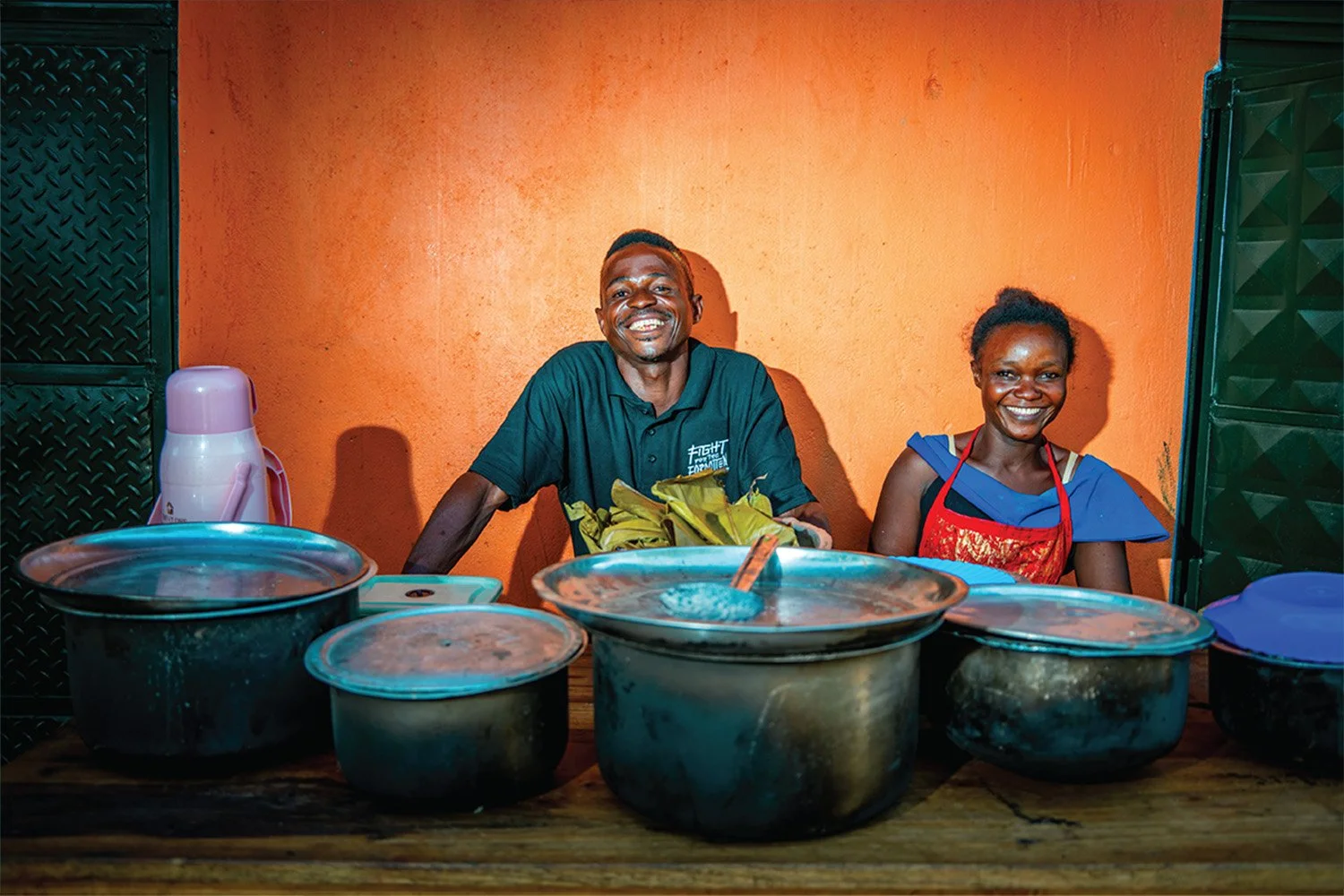
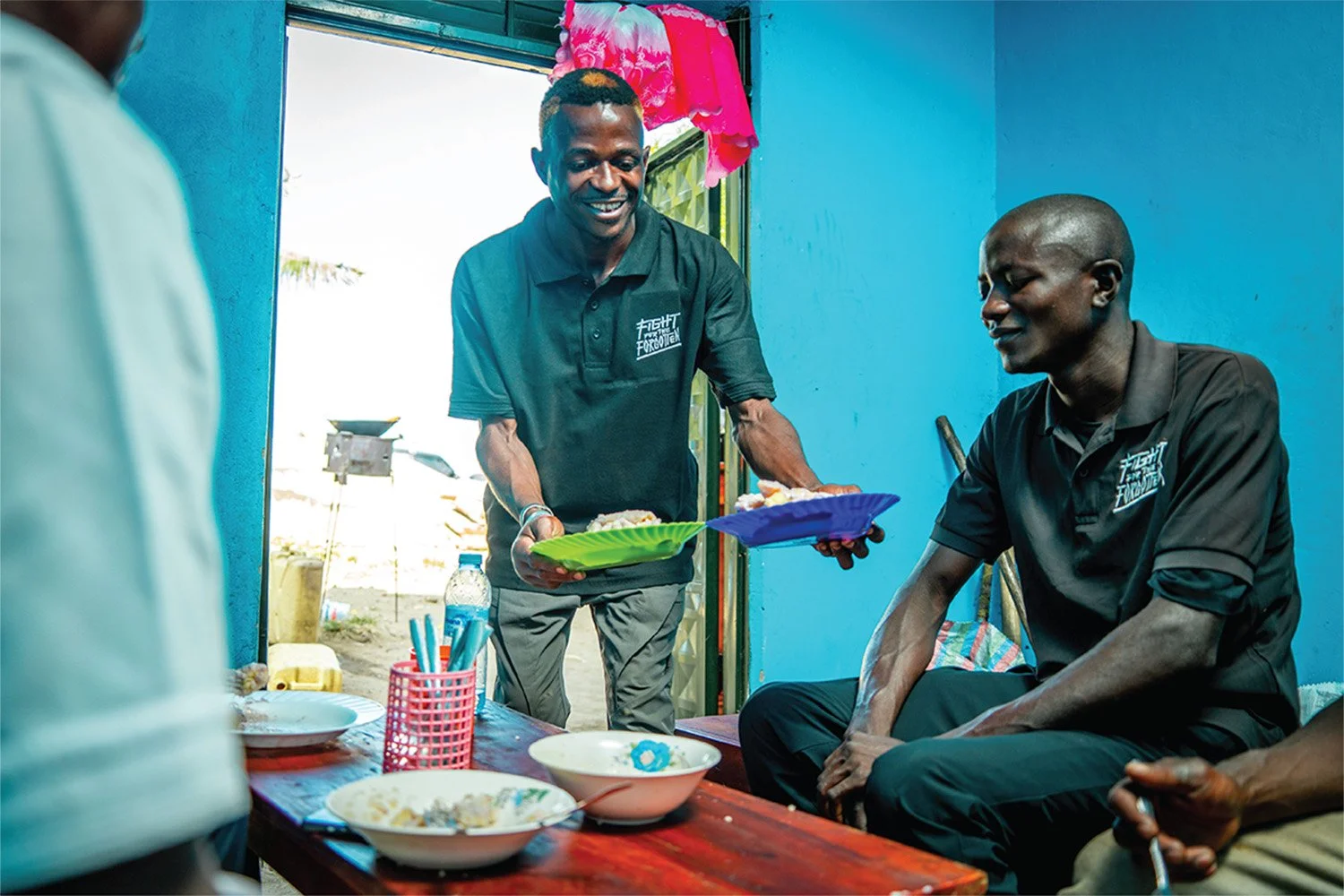
Today, Kamanya runs a small restaurant in town, a place filled with the warm smell of rice, matoke, beans, meat, and fresh chapati. He works side by side with his wife, serving neighbors, earning a steady income, and building a future for their children.
A Place To Call Home
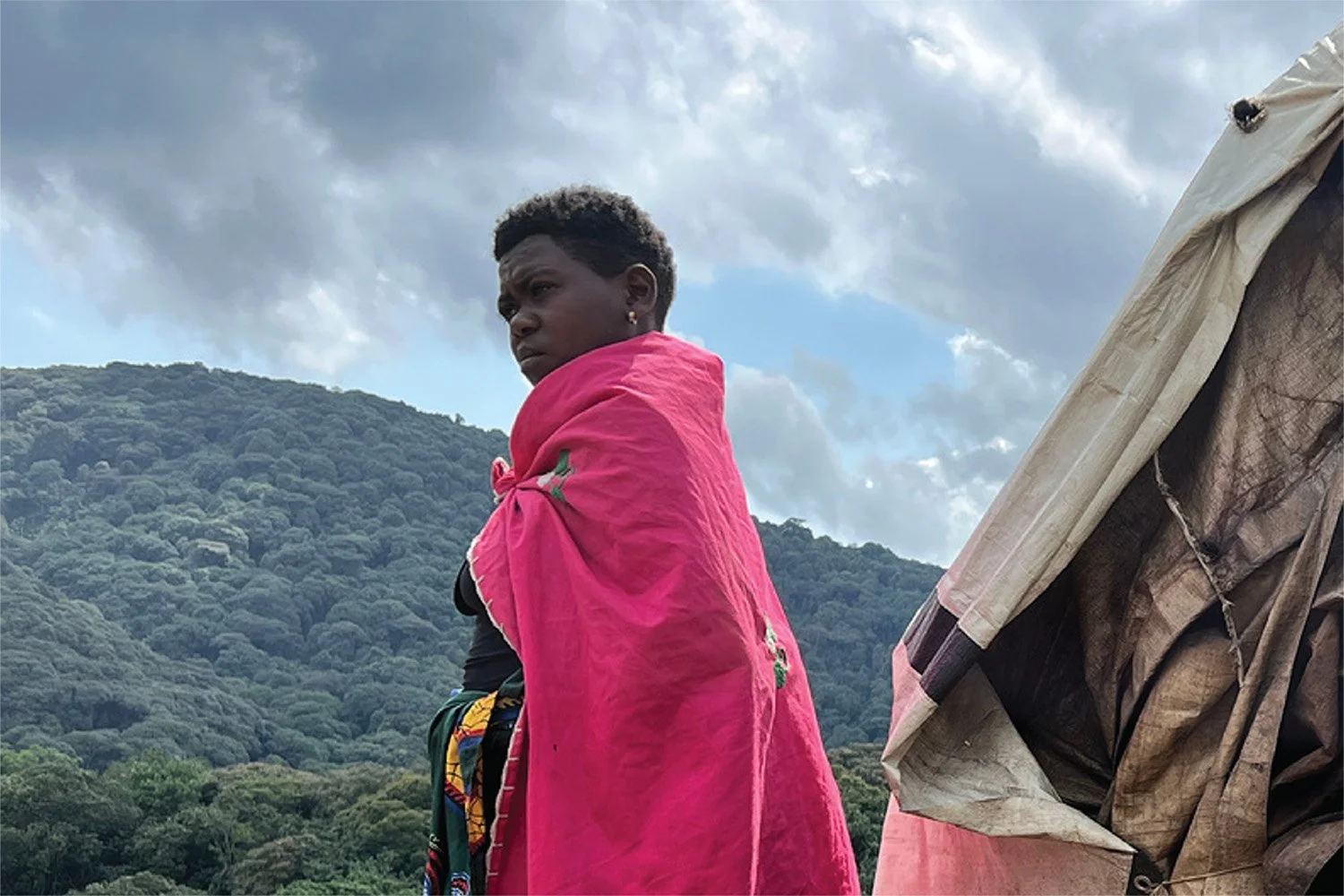
The Kanaba community, evicted from their forest home in 1991, has spent more than thirty years without a place to truly call their own. Since then, they have lived in fragile shelters on someone else’s land, always fearful of being forced to move again. And the evictions came - again and again. Families survived by working on nearby farms, taking home just enough food to get through the day, but never enough stability to build a future.
Among them was a mother raising three children in a tent stitched together from tarps and scraps. When it rained, water poured through the seams and soaked the blankets her children slept on. Every eviction meant gathering what little they had and rebuilding. Her greatest fear was that her children would grow up believing this was all life could offer.
In November, everything changed. FFTF purchased nine acres of land for the 36 households of Kanaba - land they legally own and can never lose. The mother who once tucked her children into a leaking tent now stands on her own plot, imagining the walls of her future home. Next year, the community will build permanent houses, gain clean water, and plow fields that belong to them. For the first time in a generation, the Kanaba families can plan, plant, and dream without fear.